Welcome to Our Company





 Send Inquiry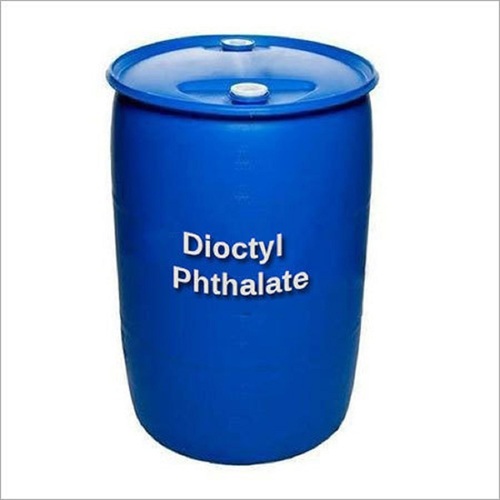
Di Octyl Phthalate
100 INR/Liter
Product Details:
- Form Oily liquid
- Smell Slight characteristic odor
- Refractive Rate n20/D 1.485
- Ph Level Neutral
- Shape Liquid
- Density 0.983 Gram per cubic centimeter(g/cm3)
- Poisonous Yes
- Click to View more
X
Di Octyl Phthalate Price And Quantity
- 200.00 - 200.00 INR/Liter
- 1000 Liter
- 100 INR/Liter
Di Octyl Phthalate Product Specifications
- Plasticizer
- 385 C
- Store in tightly closed containers, in a cool, dry, and well-ventilated place
- C24H38O4
- Phthalate ester
- C6H4(COOC8H17)2
- 204-211-0
- 117-81-7
- -50 C
- Di Octyl Phthalate
- DOP, Bis(2-ethylhexyl) phthalate
- 29173200
- Meets industrial standards
- 390.56 g/mol
- Dioctyl Phthalate
- Yes
- 99.5% min
- Odorless
- Insoluble in water, soluble in organic solvents
- Plasticizer for PVC, synthetic resins, rubber industries, coating, adhesives, and ink industries
- Industrial Grade
- Industrial
- 0.983 Gram per cubic centimeter(g/cm3)
- n20/D 1.485
- Slight characteristic odor
- Oily liquid
- Liquid
- Neutral
Di Octyl Phthalate Trade Information
- MUMBAI
- Telegraphic Transfer (T/T)
- 1000 Liter Per Day
- 1 Week
- All India
Product Description
- is mainly used as a general purpose plasticizers for PVC products manufactured by extrusion calendar, blow moulding, injection moulding, coating, etc. It is used mainly for making PVC soft & flexible for applications in the automotive industry, the manufacturing of PVC upholstery, cables, floorings, leathercloth, tablecloths, films, shower curtains, raincoats, footwear, flexible hoses, polymeric coatings, coatings, defoaming agents, gloves, etc.
Optimal Performance in Industrial Applications
DOP enhances the flexibility and workability of PVC, polyvinyl resins, and rubber. Its consistent viscosity at 25C and outstanding volume resistivity make it highly suitable for electrical insulation, film manufacturing, and cable sheathing. Industries value its effectiveness in delivering smooth, durable end products.
Safe Handling and Storage Guidelines
Di Octyl Phthalate offers low toxicity but should be handled with care, using appropriate personal protective equipment. Store in tightly closed containers, away from heat and moisture, within cool, well-ventilated spaces to maintain product integrity and ensure prolonged shelf stability.
Reliable Quality and Standards Compliance
This plasticizer meets demanding industrial standards, including strict limits on heavy metals and water content. Supplied in secure packaging options such as steel drums, ISO tanks, or IBC tanks, DOP meets purity and consistency requirements for global manufacturers and distributors.
FAQ's of Di Octyl Phthalate:
Q: How is Di Octyl Phthalate used in industrial processes?
A: Di Octyl Phthalate is primarily added as a plasticizer to PVC, synthetic resins, rubbers, coatings, adhesives, and inks to improve flexibility, workability, and durability of the final products during manufacturing.Q: What are the main benefits of using DOP in PVC and rubber applications?
A: DOP delivers excellent plasticizing efficiency, high compatibility, and ensures low volatility and migration, resulting in flexible, durable, and long-lasting materials suitable for a range of industries.Q: When should DOP be stored or handled with extra precautions?
A: DOP should be handled carefully despite its low toxicity. Always use protective equipment and store the product in tightly sealed containers, in cool, dry, and well-ventilated places to avoid contamination and maintain stability.Q: Where can Di Octyl Phthalate be sourced or supplied from?
A: DOP is available from established manufacturers, distributors, exporters, suppliers, and traders in India and globally, often provided in 200 kg steel drums, ISO tanks, or IBC tanks to accommodate different logistic needs.Q: What is the process for ensuring DOP meets industrial standards?
A: DOP quality is assured through analytical testing for parameters such as acid value, water content, volume resistivity, heavy metals content, and purity, aligning with strict industrial specifications prior to shipment.Q: How does DOP's compatibility and solubility affect its usage?
A: DOP's high compatibility with PVC and its solubility in organic solvents (while remaining insoluble in water) enables easy blending during formulation and uniform plasticization in target materials.Tell us about your requirement

Price:
Quantity
Select Unit
- 50
- 100
- 200
- 250
- 500
- 1000+
Additional detail
Mobile number
Email

Other Products in 'specialty chemicals ' category


 Send Inquiry
 Send SMS
 Call Me Free
KAVYA PHARMA
GST : 24AOKPV4993D2ZG
GST : 24AOKPV4993D2ZG

- Shop No - 215, 2nd Floor, Aaimata Road, Raj Mandir Complex, Parvat Patiya,Surat - 395010, Gujarat, India
- Phone : 08045479081

- Ms. Kavya (Proprietor)
- Mobile : 08045479081
-
 sales@kavyapharma.com

|


KAVYA PHARMA
All Rights Reserved.(Terms of Use)
Developed and Managed by Infocom Network Private Limited.
Developed and Managed by Infocom Network Private Limited.

