Welcome to Our Company





 Send Inquiry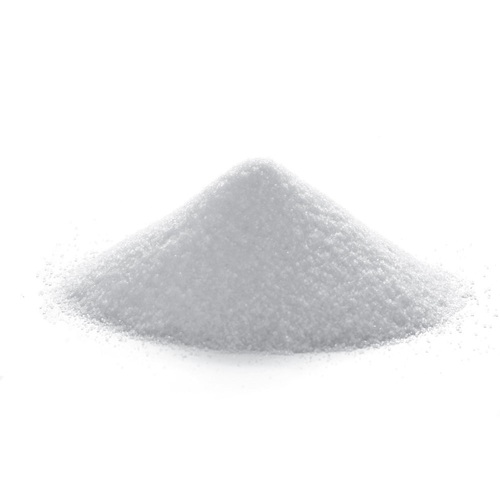
POLY ELECTROLYTES
1.00 - 2.00 USD ($)/Kilograms
Product Details:
- Appearance Fine White Powder
- Material Synthetic Polymer
- Storage Instructions Store in a cool, dry place
- Purity 99%
- Grade Industrial Grade
- CAS No 9003-05-8
- Form Powder
- Click to View more
X
POLY ELECTROLYTES Price And Quantity
- 1000 Kilograms
- 1.00 - 2.00 USD ($)/Kilograms
POLY ELECTROLYTES Product Specifications
- 99%
- Flocculant, Thickening Agent
- Fine White Powder
- Solid
- Synthetic Polymer
- Store in a cool, dry place
- Powder
- Poly Electrolytes
- Polyacrylamide Sodium Salt
- (C3H5NaO)n
- Industrial Grade
- 9003-05-8
- White
- India
- Easily soluble in water
- 25 kg bags or as required
- 0.6-0.8 g/cm3
- 10%
- Odorless
- Wastewater treatment, Drinking Water Treatment, Paper & Pulp Industries, Textile, Sugar Industry, Mining
- Anionic/Cationic/Non-Ionic
- 6-8
- 24 months
- Non-toxic
POLY ELECTROLYTES Trade Information
- MUMBAI
- Telegraphic Transfer (T/T)
- 2000 Kilograms Per Day
- 1 Week
- All India
Product Description
Polyelectrolytes are polymers whose repeating units bear an electrolyte group. These groups will dissociate in aqueous solutions (water), making the polymers charged. Polyelectrolyte properties are thus similar to both electrolytes (salts) and polymers (high molecular weight compounds), and are sometimes called polysalts. Like salts, their solutions are electrically conductive. Like polymers, their solutions are often viscous. Charged molecular chains, commonly present in soft matter systems, play a fundamental role in determining structure, stability and the interactions of various molecular assemblies. Theoretical approaches[1] to describing their statistical properties differ profoundly from those of their electrically neutral counterparts, while their unique properties are being exploited in a wide range of technological and industrial fields. One of their major roles, however, seems to be the one played in biology and biochemistry. Many biological molecules are polyelectrolytes. For instance, polypeptides, glycosaminoglycans, and DNA are polyelectrolytes. Both natural and synthetic polyelectrolytes are used in a variety of industries.Reliable Performance in Water Treatment
POLY ELECTROLYTES deliver efficient flocculation and clarification in both industrial and municipal water treatment systems. Their high purity (99%) and excellent solubility ensure rapid and consistent results, helping to remove suspended solids, organic matter, and colloidal particles. The products adaptability to various water chemistries and pH stability make it ideal for a broad spectrum of applications.
Versatile Applications Across Industries
This product finds wide acceptance in diverse sectors including wastewater management, paper and pulp manufacturing, textile processing, sugar refining, and mining operations. As a flocculant and thickening agent, it improves process efficiency, reduces impurities, and enhances sedimentation. Its non-toxic nature allows safe handling and compliance with industry standards.
FAQs of POLY ELECTROLYTES:
Q: How are poly electrolytes used in wastewater treatment processes?
A: Poly electrolytes are added during the coagulation and flocculation steps, where they combine with suspended solids and impurities to form larger aggregates. These aggregates settle easily, facilitating removal and improving water clarity.Q: What are the advantages of using poly electrolytes in industrial applications?
A: Key benefits include their high efficiency in reducing turbidity, fast dissolution in water, stability across pH ranges, and non-toxic composition. This leads to enhanced product yields, reduced operational costs, and minimized environmental impact.Q: When should poly electrolytes be applied in the treatment process?
A: They are commonly introduced at the initial stages of water or effluent treatment to maximize the removal of suspended particles, typically after primary settling or before filtration steps.Q: Where can poly electrolytes be sourced and in what packaging?
A: These products are manufactured, traded, and exported from India, available through reliable distributors and suppliers. Standard packaging is 25 kg bags, with options for customized packaging as required.Q: What is the recommended process for dissolving poly electrolytes?
A: To prepare a working solution, slowly add the powder into vigorously stirred water at ambient temperature. Stir until a clear, homogeneous solution is formed, ensuring optimal flocculation performance.Q: How should poly electrolytes be stored for maximum shelf life?
A: Store in sealed containers in a cool, dry location, away from moisture and sunlight. Following these guidelines helps maintain a shelf life of up to 24 months without loss of quality.Tell us about your requirement

Price:
Quantity
Select Unit
- 50
- 100
- 200
- 250
- 500
- 1000+
Additional detail
Mobile number
Email

Other Products in 'pharmaceutical Intermediates' category



 Send Inquiry
 Send SMS
 Call Me Free
KAVYA PHARMA
GST : 24AOKPV4993D2ZG
GST : 24AOKPV4993D2ZG

- Shop No - 215, 2nd Floor, Aaimata Road, Raj Mandir Complex, Parvat Patiya,Surat - 395010, Gujarat, India
- Phone : 08045479081

- Ms. Kavya (Proprietor)
- Mobile : 08045479081
-
 sales@kavyapharma.com

|


KAVYA PHARMA
All Rights Reserved.(Terms of Use)
Developed and Managed by Infocom Network Private Limited.
Developed and Managed by Infocom Network Private Limited.

